1. Why is maintaining a louvred pergola important?
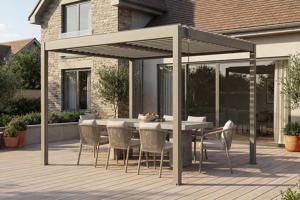
Exposed to the elements year-round, a louvred pergola faces rain, intense sun, spring pollen and autumn leaves. Without maintenance, these deposits eventually dull the structure, clog the slat joints and block the water drainage systems.
Regular cleaning of your pergola ensures not only its visual appeal by preventing stubborn stains, but also protects its mechanism. Indeed, if the slat axis becomes clogged, adjusting them becomes difficult and risks damaging the motor.
The good news is that maintaining a louvred pergola takes little time. Two interventions per year, in spring and autumn, cover the needs of most installations. A model exposed under trees or near the sea may however require an additional cleaning.
2. How to clean an aluminium louvered pergola?
Aluminium is used in most louvered pergolas sold today. This material has the advantage of resisting corrosion and requiring no special treatment. Its maintenance comes down to gentle washing.
Start by removing dry debris with a soft brush or a brush with soft bristles. Then prepare a mixture of lukewarm water and neutral soap, such as black soap or diluted washing liquid. Wipe a non-abrasive sponge over the frame, roof and sides, then rinse with clean water using a garden hose. Finally, dry with a microfibre cloth to avoid limescale marks.
A few precautions are worth remembering. Avoid harsh products like acetone, undiluted bleach or abrasive cleaners, as they attack the protective coating on the aluminium. Also put away the pressure washer, as its jet may force water into the joints and damage the paint. Moderate pressure is always preferable.
Casanoov louvered pergolas combine an aluminium structure and galvanised steel blades, two materials designed to last with minimal maintenance. This choice limits the appearance of rust and makes seasonal cleaning easier.
3. How to maintain a wooden louvered pergola?
Wood brings warmth and charm, but it lives and breathes, which means it requires more careful attention than aluminium. Being porous by nature, it absorbs moisture and turns grey over time due to UV exposure.
For regular cleaning, use a soft brush and soapy water, rubbing in the direction of the grain. Avoid soaking the wood and let it dry completely before any other operation. Excess water encourages swelling and, in time, the growth of fungi.
Beyond simple washing, wood requires periodic protective treatment. A wood stain or specific oil, applied every two to three years depending on exposure, nourishes the material and protects it from the elements. If the wood has already greyed, a greywash restorer returns it to its original colour before applying a fresh coat of protection. This step, more demanding than maintaining a metal structure, determines how long the whole thing will last.
4. What maintenance does a louvred pergola in steel require?
Steel is mainly found in load-bearing elements and, at Casanoov, in galvanized blades. Robust by nature, it has one real weakness: corrosion when its protective coating is damaged.
Cleaning a louvred pergola in steel follows the same approach as aluminium, using soapy water and a soft sponge. The key is staying vigilant during inspection. Look for deep scratches, chips or signs of budding rust, especially around fixings. A quick touch-up with suitable anti-rust paint stops the problem before it spreads. The galvanization on Casanoov blades adds an extra barrier against oxidation and delays this kind of corrective maintenance.
5. How do you successfully clean the blades of a louvred pergola?
The blades of a louvred pergola are the heart of the structure, controlling shade, light and ventilation. To ensure they move freely and work properly, keeping them clean is essential. Their cleaning does require some care.
To access them easily, set the blades horizontal in the open position. Then clean both the top and underside with a soft sponge and soapy water, before rinsing without soaking the mechanism. Once a year, apply lubricant to the pivot points with a suitable product to keep rotation smooth and silent. A well-maintained mechanism puts less strain on the motor.
Also pay special attention to cleaning the gutters and drainage channels. Leaves, moss and twigs collect there and eventually block rainwater drainage. Remove debris by hand or with a small brush, then check that water flows freely by pouring some clean water through. A blocked drainage system can cause overflow and water pooling on the roof.
6. How often should you clean your louvred pergola?
While cleaning frequency depends mainly on your environment and the pergola's material, here are some guidelines to help you stay on top of maintenance.
For an aluminium structure, two complete cleanings a year are usually enough in most cases—one after winter and another following leaf fall. The gutters, however, benefit from more frequent checks, especially in autumn. A wooden pergola follows the same washing schedule, plus protective treatment every two to three years. Steel, meanwhile, mainly requires regular visual inspection of its coating.
Your pergola's immediate surroundings may also call for extra attention. For instance, the salty air of a seaside location or falling leaves and sap from nearby trees call for more frequent cleaning. Ultimately, it's by observing your structure's condition throughout the seasons that you'll find the ideal maintenance schedule.
Balance comfort, durability and minimal upkeep. Explore now all the louvred pergolas and shelters in the Casanoov range.